Understanding Price Feeds in Cryptocurrency Trading
As the cryptocurrency landscape continues to evolve, the importance of real-time data becomes increasingly paramount. Traders and investors rely on accurate price feeds to make informed decisions, assess market conditions, and execute trades effectively. A price feed provides the necessary market information that powers trading strategies, enabling participants to navigate volatile markets with greater confidence. When exploring options, price feed provide comprehensive insights into the dynamics of digital assets, stocks, and forex.
What is a Price Feed?
A price feed refers to a continuous supply of real-time market data, which includes the latest prices, trading volumes, and other relevant metrics for financial instruments. Price feeds can vary based on the type of asset being traded, whether it's cryptocurrencies, stocks, or Forex currency pairs. They typically function through APIs (Application Programming Interfaces) that connect to financial data providers or exchanges, offering either a REST or WebSocket interface for access.
Key Components of a Real-Time Price Feed
The core components of a real-time price feed include:
- Market Quotes: Updated bid and ask prices that reflect the current trading conditions.
- Trade Data: Information about executed trades, including price, volume, and time.
- Order Book Depth: The live snapshot of buy and sell orders, showing how much of an asset is available at various price levels.
- Latency: The delay between the actual change in price and the time it takes for that change to be reflected in the feed, which ideally should be in milliseconds.
Importance of Price Feeds in Trading Strategies
Price feeds are essential for executing a variety of trading strategies. They enable traders to react to price movements quickly, implement algorithmic trading models, and conduct technical analyses. Understanding how to leverage price feeds effectively can enhance decision-making and improve overall trading performance. The role of reliable price feeds becomes particularly critical during periods of market volatility, where every millisecond counts.
WebSocket vs. REST for Market Data
When it comes to choosing between WebSocket and REST for accessing market data, understanding their respective advantages and use cases is crucial for developers and traders alike.
Advantages of WebSocket Technology
WebSocket technology offers several benefits over traditional REST APIs:
- Real-Time Data: WebSockets provide a persistent connection through which data can be streamed in real-time, eliminating the need for polling and resulting in lower latency.
- Efficiency: Instead of sending frequent API requests, WebSockets push updates to clients as they occur, reducing server load and bandwidth usage.
- Scalability: WebSockets can handle a high number of simultaneous connections, making them suitable for applications with many users demanding live data.
When to Use REST API for Historical Data
While WebSockets are ideal for real-time price updates, REST APIs remain relevant in specific scenarios:
- Initial Data Snapshots: REST APIs can deliver initial snapshots of the order book or market data when a connection is established.
- Historical Analysis: For analyses requiring historical data sets, REST APIs are often more efficient as they allow batch requests for past data.
- Gap Recovery: In cases where a connection is lost, REST can be utilized to recover missed data by fetching the latest snapshot.
Case Studies on Market Data Integration
Numerous companies integrate price feeds into their platforms to provide users with enhanced trading experiences. For instance, trading terminals leverage WebSocket feeds to update charts and indicators in real time, while fintech apps use them to analyze market movements and alert users of significant price changes.
Setting Up an Efficient Trading Environment
Creating an optimal trading environment is crucial for leveraging price feeds effectively and ensuring efficient market participation.
Essential Tools and Software for Traders
When setting up a trading environment, consider the following tools:
- Trading Platforms: Utilize platforms that offer built-in access to price feeds, enabling seamless integration for trading strategies.
- Portfolio Tracking Tools: Tools that can sync with your various trading accounts and provide live updates on performance.
- Market Analysis Software: Solutions that incorporate advanced charting tools and enable technical analysis using real-time data.
Optimal Hardware Setup for Price Feed Monitoring
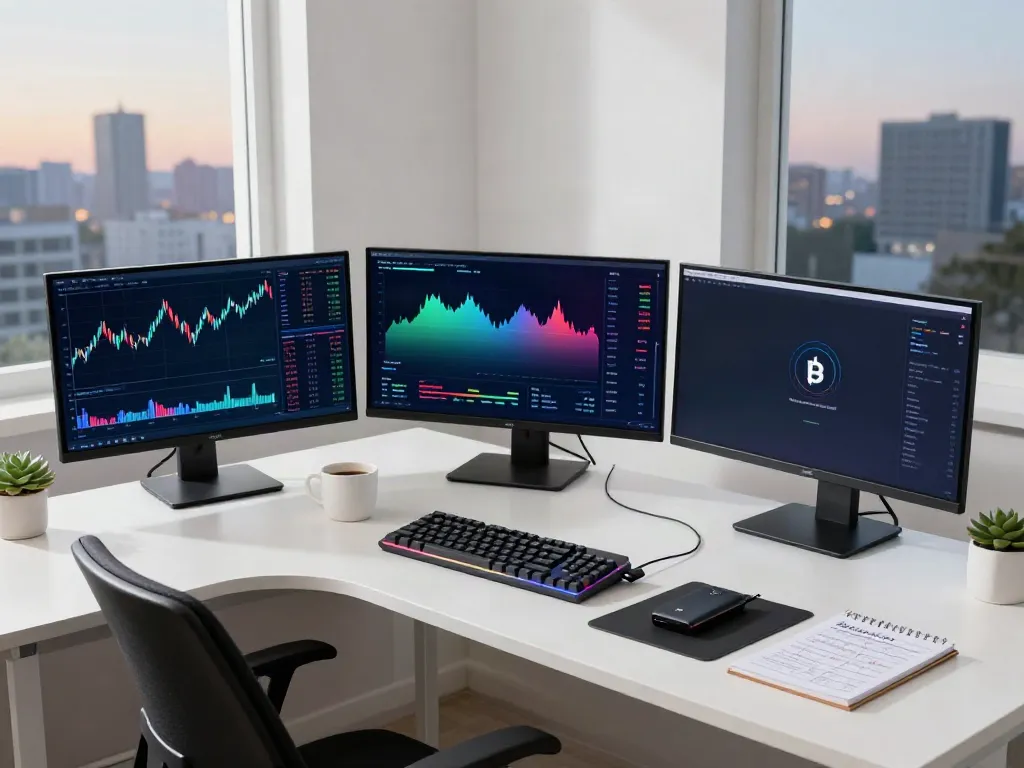
A reliable hardware setup for monitoring price feeds should include:
- High-Performance Computer: To run multiple applications and analyses simultaneously without lag.
- Stable Internet Connection: A fast and stable internet connection to ensure continuous data flow.
- Multiple Monitors: Facilitating real-time data tracking across various panels for better visual management.
Securing Your Trading Environment
Security is paramount when trading digital assets. Here are key practices:
- Private Key Management: Use secure storage for private keys such as hardware wallets.
- Two-Factor Authentication (2FA): Implement 2FA on all trading platforms and wallets to add an extra layer of security.
- Regular Software Updates: Keep your trading software and tools updated to protect against vulnerabilities.
The Role of Price Feeds in DeFi Applications
Price feeds are crucial for decentralized finance (DeFi) applications, where accurate, real-time data informs smart contracts and financial transactions.
Connecting to DeFi Protocols with Real-Time Data
Many DeFi protocols rely on real-time price data to function effectively, especially those that involve lending, borrowing, and trading. For instance, platforms like Aave and Compound utilize price feeds to assess collateral values and manage risk, ensuring that users can securely execute trades and manage their investments.
Use Cases for Price Feeds in Liquidity Pools
Price feeds help determine the value of tokens in liquidity pools, vital for preventing arbitrage opportunities and maintaining equilibrium in decentralized exchanges (DEXs). An accurate price feed can also assist liquidity providers in making informed decisions regarding liquidity provision and withdrawal.
Strategies for Leveraging Price Feeds in Yield Farming
Yield farming involves using price feeds to optimize returns on staked assets. By understanding market movements and price trends, yield farmers can better strategize on which tokens to stake, when to enter or exit pools, and enhance overall profits while minimizing risks.
Future Trends and Innovations in Market Data
The evolution of market data feeds continues as technology advances and market demands shift. Staying ahead of these trends is essential for traders seeking an edge in the competitive landscape.
Emerging Technologies in Price Feed Services
Innovations in price feeds may include enhanced predictive analytics, powered by artificial intelligence (AI) and machine learning. These technologies can analyze historical price data to forecast trends and movements more accurately, lending a significant advantage to traders.
Impact of AI and Machine Learning on Market Analysis
AI can facilitate sophisticated pattern recognition, enabling traders to identify market sentiments and potential price movements. Utilizing AI-driven tools can improve strategy accuracy and adaptability.
Regulatory Considerations for Market Data Providers in 2026
With the trajectory of cryptocurrency regulation tightening, market data providers will face stringent compliance regarding the dissemination of price feeds. Staying informed of changes in regulations, such as SEC classifications for tokens and the EU's MiCA regulations, will be essential for maintaining operational legitimacy.
What are the primary advantages of using price feeds in trading?
Price feeds provide accurate, real-time data that informs trading decisions, enhances execution precision, and enables traders to analyze market conditions effectively. They support algorithmic trading and help mitigate risks associated with price discrepancies.
How can I secure my crypto investments against scams?
Implementing robust security measures, such as using hardware wallets, avoiding suspicious links, enabling 2FA, and practicing due diligence in research are crucial steps to protect investments from scams.
What technology should I use for optimal price feed monitoring?
Utilizing platforms that support WebSocket integration will allow for efficient real-time price monitoring, while secure cloud applications can aid in maintaining and analyzing past data without risk of loss.
How will price feeds evolve with DeFi advancements?
As DeFi grows, price feeds are likely to incorporate even more decentralized methodologies, leveraging oracle networks for accuracy and responsiveness to market changes, ultimately improving the integrity of decentralized applications.
What are the potential risks associated with market data feeds?
Potential risks include reliance on inaccurate or delayed data, which can lead to ill-informed trading decisions and increased exposure to market volatility. Implementing redundancies and cross-verifying price sources can help mitigate these risks.